MAK Acquisition Terminates UniUni Deal: SPAC Combination Officially Ends

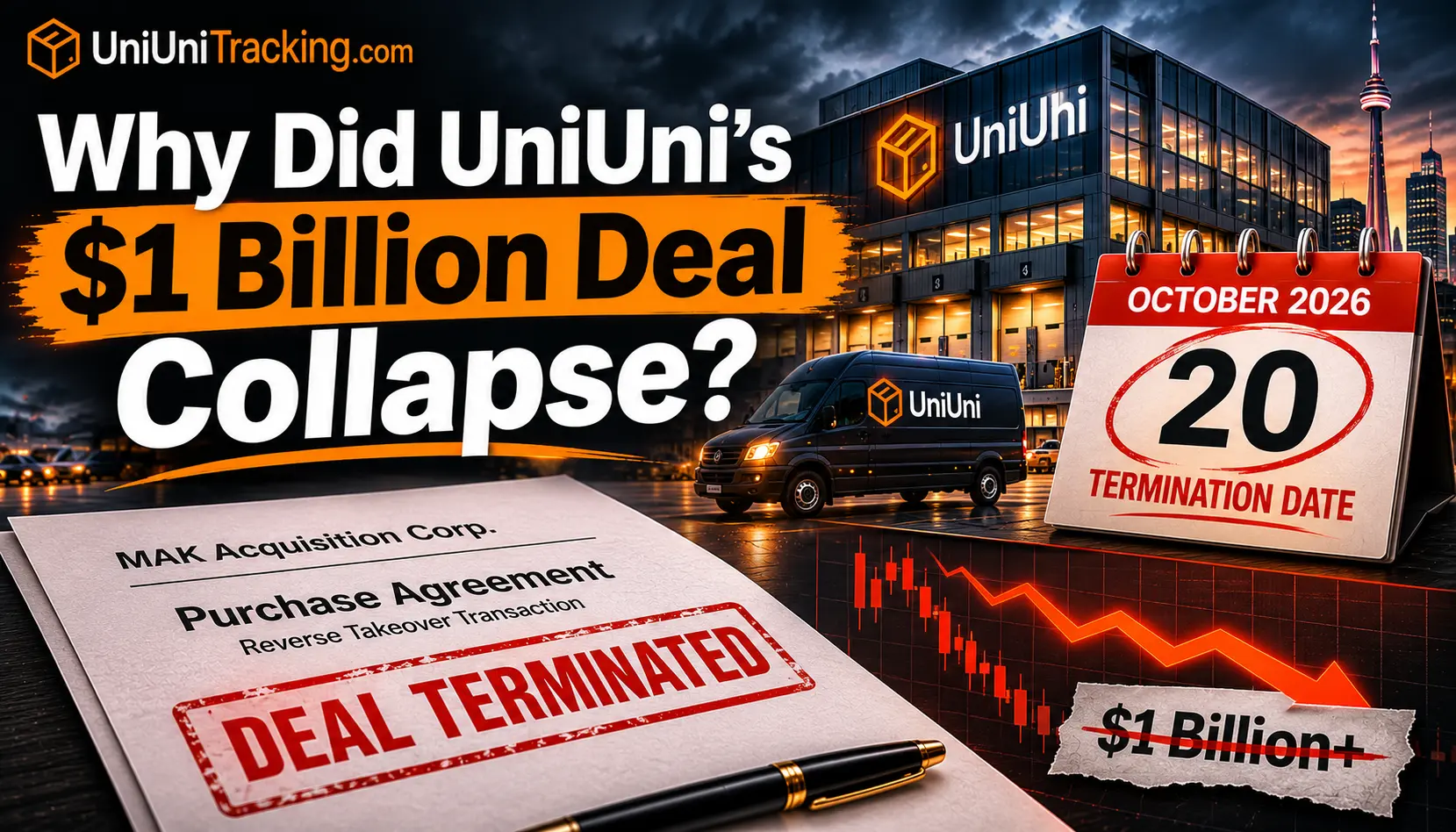
On October 20, 2026, MAK Acquisition Corp. delivered a formal notice of termination to UniUni. The proposed reverse takeover that would have taken the last-mile delivery company public was over.
I went back through MAK’s official termination release, The Globe and Mail’s reporting, and the earlier breach notice to map out exactly how the deal collapsed and what both sides said afterward. This post covers the final chapter of the UniUni-MAK SPAC story.
Official Reason for the Termination
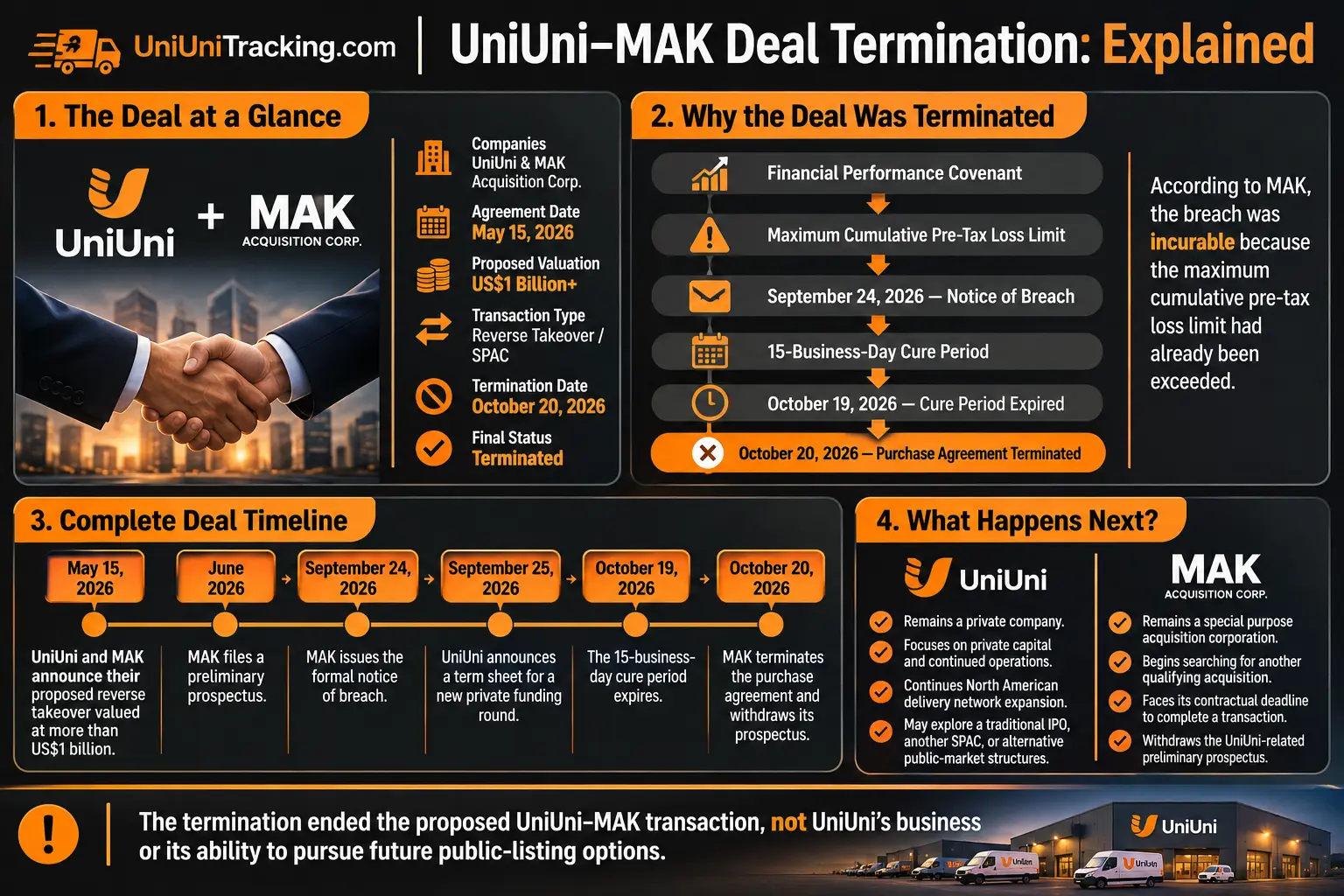
MAK’s position was straightforward. On September 24, 2026 the SPAC had delivered a notice of breach, alleging that UniUni had failed to operate within the interim covenants in the May 15 purchase agreement. The key issue was a defined maximum cumulative pre-tax loss.
Under the agreement, UniUni had 15 business days to cure the breach. That window expired on October 19, 2026. According to MAK, the breach was incurable because UniUni had already exceeded the maximum cumulative pre-tax loss limit. Losses that have already been incurred cannot be reversed.
On October 20 MAK exercised its right to terminate the purchase agreement. The proposed transaction would not proceed. MAK also stated that it reserved all of its rights against UniUni.
You can read The Globe and Mail’s account of the termination here:
Matt Proud-led SPAC makes good on threat to terminate combination with UniUni – The Globe and Mail
Full Timeline of the UniUni-MAK SPAC Deal
Putting the entire sequence in one place makes the outcome clearer:
What Happens Next for UniUni and MAK Acquisition
UniUni’s Path Forward
With the SPAC route closed, UniUni’s immediate focus shifted to private capital and continued operations. The company had already signaled in late September that it was pursuing additional funding from existing investors. That private path became the primary avenue for supporting growth and peak-season capacity.
UniUni remains a private company. Nothing in the termination prevents it from exploring other public-market options in the future, whether through a traditional IPO, a different SPAC, or another structure. For the near term, however, the company is operating without the liquidity and visibility that a completed reverse takeover would have provided.
MAK’s Next Steps
MAK Acquisition remains a special purpose acquisition corporation. In its termination announcement the company stated that it would continue searching for niche-market businesses that provide critical solutions, demonstrate strong revenue retention, and have diversified customer bases.
SPACs operate under time constraints. MAK noted that it has a deadline to complete a qualifying acquisition. The failure of the UniUni transaction resets the search process and puts pressure on the sponsor team to identify and close an alternative deal before that window closes.
MAK also withdrew the preliminary prospectus that had been filed in connection with the UniUni transaction and cautioned investors not to rely on information about UniUni or the proposed deal contained in earlier documents.
Impact on UniUni’s Public Listing Plans
The termination ends one specific path to the public markets. It does not permanently close the door on a future listing, but it does remove the structure that had been in place since May 2026.
For UniUni, the practical consequences include the loss of the capital and public-company platform that the MAK transaction was expected to deliver, as well as the need to manage perceptions around the failed process. High-growth companies that see a SPAC or IPO process collapse often face questions from investors, partners, and employees about the underlying reasons and the strength of the business.
In this case the stated reason was a financial covenant breach rather than a collapse in the core business model or a governance crisis. That distinction may matter for how the market interprets the outcome, but the public-listing path through MAK is closed regardless.
Key Lessons from the Collapsed Deal
A few practical takeaways stand out from the UniUni-MAK episode:
Frequently Asked Questions
Final Thoughts
The UniUni-MAK story ended the way many conditional SPAC transactions end when interim performance diverges from the terms that were negotiated at signing. A financial covenant that looked manageable in May became the decisive issue by October.
For UniUni the immediate task is to execute on its private funding plans and continue scaling its North American delivery network without the public-market platform it had been pursuing. For MAK the task is to find another qualifying acquisition before its own deadline arrives.
This post is based on MAK’s official termination announcement, contemporaneous reporting from The Globe and Mail, and the earlier public record of the breach notice and funding term sheet.