
UniUni Lawsuit 2026: Point2Point Claims Over 16,000 Packages Were Withheld — Full Breakdown for Trackers

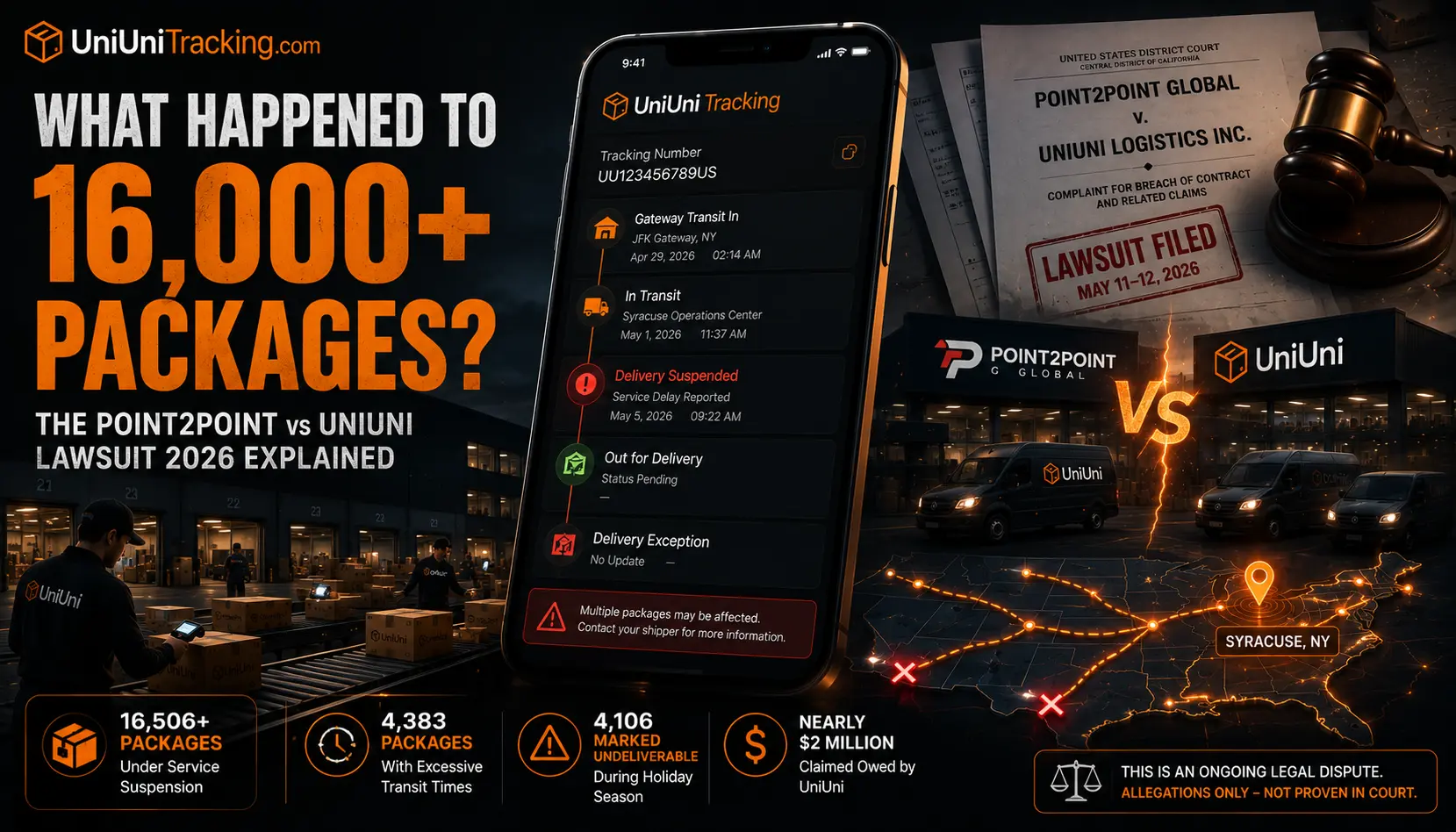
A high-stakes legal battle between U.S. logistics company Point2Point Global and last-mile delivery provider UniUni has drawn fresh attention in August 2026. Point2Point alleges that UniUni deliberately delayed and suspended delivery of more than 16,000 packages, claiming the move was retaliation after Point2Point won business both companies were chasing. UniUni strongly denies the accusations and says the real issue is unpaid invoices.
If you regularly track UniUni packages or rely on the service for e-commerce shipments, this dispute raises practical questions about reliability, delays, and what to do if your package stalls. Here’s a clear, neutral breakdown of the facts, allegations, responses, and implications for everyday trackers.
What Exactly Happened Between Point2Point and UniUni?
Who Are the Companies Involved?
Point2Point Global is a Massachusetts-based shipping and logistics firm. UniUni (operated in the U.S. through UniUni Logistics Inc.) is a rapidly growing last-mile delivery network based in Richmond, British Columbia, known for handling high volumes of e-commerce parcels, including for major cross-border platforms.
According to court filings, Point2Point hired UniUni in late 2024 to handle last-mile delivery of its packages in the United States.
The Core Allegations in the Lawsuit
In a complaint filed in May 2026 in the U.S. District Court for the Central District of California, Point2Point accuses UniUni of breach of contract, service failures, and retaliatory conduct. The company claims UniUni slowed deliveries, marked large numbers of packages as undeliverable, and later suspended service on thousands of parcels. Check out the first details here.
UniUni’s Response and Counter-Claims
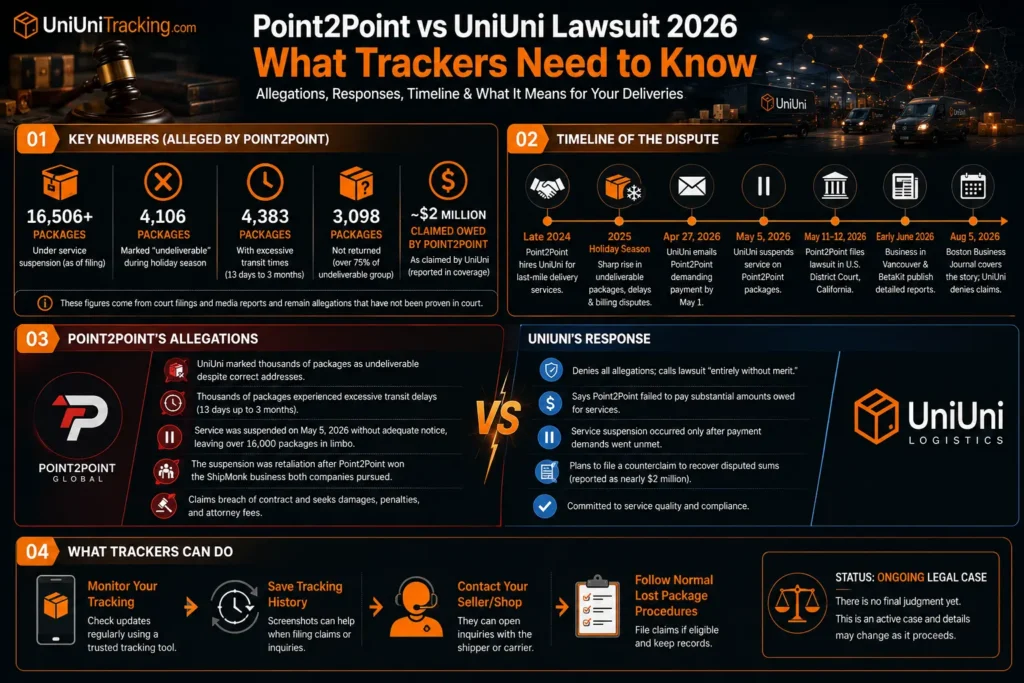
UniUni has categorically denied the allegations, calling the lawsuit “entirely without merit.” The company states the dispute began because Point2Point failed to pay substantial amounts owed for services. UniUni says it suspended service only after payment demands went unmet and has indicated it plans to file a counterclaim to recover the disputed sums (reported in some coverage as nearly $2 million). Source
Key Numbers at a Glance
Metric | Figure Reported in Filings / Coverage | Context |
|---|---|---|
Packages under service suspension (as of filing) | 16,506 | Core claim by Point2Point |
Holiday-season packages marked “undeliverable” | 4,106 | Declared value ~$166,976 |
Packages not returned (of the undeliverable group) | 3,098 (over 75%) | As of early May 2026 |
Packages with excessive transit times | 4,383 | Ranges from 13 days to 3 months |
Alleged amount owed by Point2Point (UniUni’s position) | Nearly $2 million | Cited in Boston Business Journal reporting |
These figures come from Point2Point’s court filings and subsequent media reports. They remain allegations and have not been proven in court.
Detailed Timeline of the Dispute
What Point2Point Alleges Happened
Holiday Season Delays and “Undeliverable” Packages
Point2Point claims that during the peak 2025 holiday period, UniUni marked 4,106 packages as undeliverable even though many were correctly addressed. It further alleges that 4,383 packages experienced transit times far beyond normal ranges.
Service Suspension on May 5, 2026
The lawsuit states that UniUni stopped processing and delivering Point2Point packages on May 5 without prior adequate notice, leaving more than 16,000 parcels in limbo at the time of filing.
Claims of Retaliation Over the ShipMonk Contract
Point2Point argues the timing was not coincidental. Both companies had bid for work from third-party logistics provider ShipMonk. Point2Point secured a significant share; UniUni did not. The suspension allegedly began the same day Point2Point started handling that new volume.
Alleged Client Poaching and Use of Confidential Information
Point2Point also claims UniUni contacted its end customers about the suspended packages, blamed Point2Point, and offered lower pricing and better service in an attempt to take the business directly—using information gained through the partnership.
UniUni’s Side of the Story
Non-Payment Claims and Contract Suspension Rights
UniUni maintains that Point2Point breached the contract by failing to pay for services rendered, particularly around the holiday season. The company says it issued clear payment demands and only suspended service after those deadlines passed.
Official Denial of Retaliation
In statements to media, UniUni has rejected any suggestion of a “retaliation campaign.” It describes the lawsuit as an attempt to rewrite the narrative around a straightforward payment dispute.
Plans for Counter-Lawsuit
UniUni has stated it intends to pursue its own legal action to recover the amounts it claims are owed and to defend against what it calls meritless accusations.
Why This Lawsuit Matters to Everyday UniUni Users and Shippers
Potential Impact on Delivery Reliability
Large-scale service suspensions between partners can create temporary backlogs or force packages onto alternative networks. While this specific dispute involves Point2Point’s volume, it highlights how commercial disagreements can affect last-mile performance.
What Trackers Should Watch For
Unusual status updates (prolonged “in transit,” sudden “exception,” or lack of scans) are worth documenting. Most individual consumer packages move through UniUni’s broader network and are unlikely to be directly caught in this commercial fight.
Broader Context of UniUni’s Growth and Legal Challenges
UniUni has expanded rapidly and has faced other legal matters related to labor practices in certain U.S. jurisdictions. This Point2Point case adds a commercial contract dispute to the public record at a time when the company has also been advancing plans to go public.
Current Status of the Case (as of August 2026)
The lawsuit remains ongoing in the Central District of California. Early in the case, the court granted a temporary restraining order to protect confidential information and trade secrets. No final judgment on the package-delivery or breach-of-contract claims has been issued. Both sides continue to litigate.
For background on how this dispute first came to light, see our original coverage from June 2026: UniUni Lawsuit 2026: Allegations of Withheld Parcels & Retaliation After Lost Bid.